 Choisir votre langue / Choose your language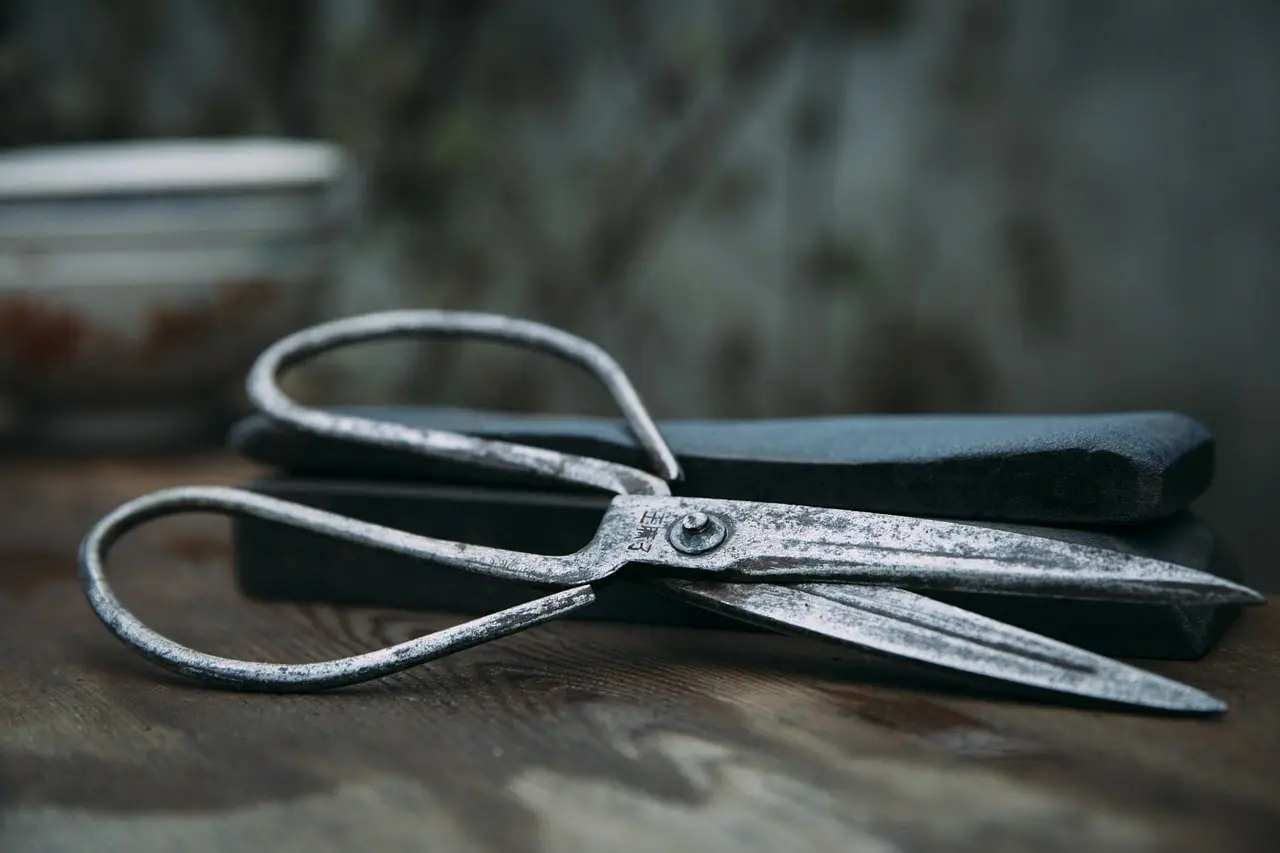
Discover the essential tools for beginners to get your passion for the art of bonsai off to a good start.
Claude Savard
CSCeramique
Does the essential tools for beginners in the fascinating art of bonsai seem daunting? Rest assured, the secret to a successful start lies not in quantity, but in the relevance and quality of your equipment. Precision tools are an extension of your hand and the first guarantee of the health of your trees. This guide is designed to point you in the direction of the truly essential tools that will transform your practice and ensure healthy growth for your bonsai. Discover how to invest wisely to build a solid foundation for your new passion.
What are the essential tools for getting started with bonsai?
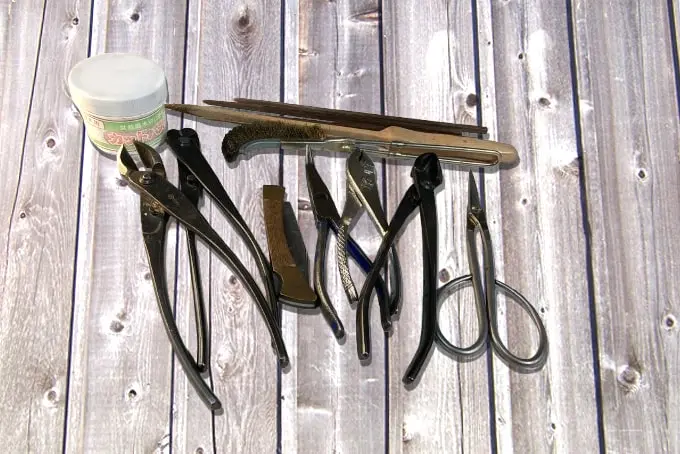
To successfully launch yourself into the world of bonsai, it's crucial to be well-equipped. However, there's absolutely no need to acquire the complete arsenal the market has to offer. Your first priority should be the quality of your tools. After all, they play a decisive role in the development of your bonsai. A poorly designed or low-quality tool will not only force you to make a double purchase, but may also injure your trees. On the other hand, specific tools guarantee clean, precise and comfortable work. They enable clean cuts that promote optimal healing, thus ensuring the vigor and beauty of your tree.
Therefore, avoid complete sets at knock-down prices. They are often made from soft steel that doesn't retain its sharpness and oxidizes quickly. It's better to buy a few high-quality pieces that will last you a long time.
Scissors: Precision at your fingertips

Image by Ilona Ilyés from Pixabay
There are several types of scissors on the market. Here are the three most common models to help you sort them out.
Root Trimming Shears
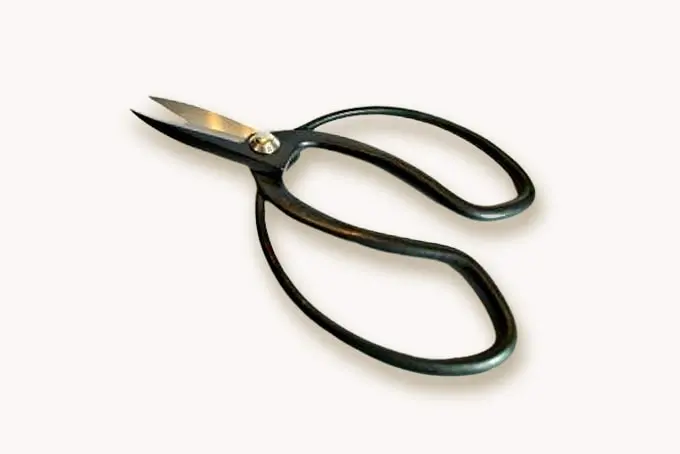

Image courtesy of
Art & Culture Bonsaï
Contrary to popular belief, this sturdy, short trimming shears is specifically designed for root pruning.
However, they are not essential for beginners and can be replaced by a good quality garden pruning shear.
To recognize a good pruning shear, make sure it has two intersecting blades, one sharp and the other, the counter-blade, for support. These pruning shears, with their sturdy steel blades, are ideal for cutting even the thickest roots effortlessly.
Leaf Trimming Shears
This is the essential tool in your arsenal! It should be your first priority when it comes to quality, as you'll be using it constantly. Perfect for pruning small branches, tender stems and thinning foliage, it features fine blades and long handles. Thanks to this design, you can reach hard-to-reach areas without inserting your hands and risking damaging your tree. Although some enthusiasts use flower secateurs, these don't offer the same reach or precision.
These leaf trimming shears are available in lengths ranging from 150 mm to 210 mm.
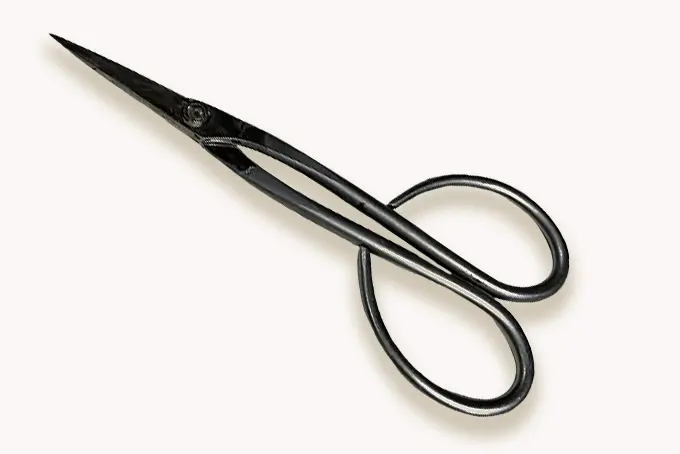
Image CSCeramique
Bud scissors
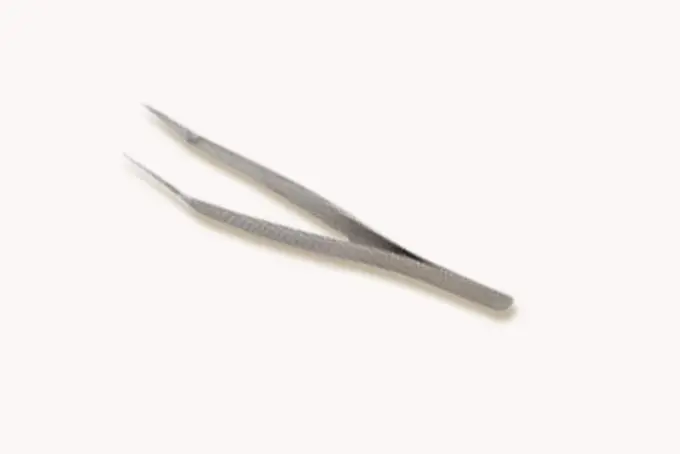
Image courtesy of
Art & Culture Bonsaï
This high-precision tool is best reserved for professionals and advanced amateurs. It is used to remove unwanted buds to refine the tree's structure. Its use therefore requires a good knowledge of the species and their growth patterns.
It is therefore not a priority purchase for beginners.
Pliers: For sculpting and shaping

Image by Ilona Ilyés from Pixabay
There is a wide range of pliers on the market, each with a specific function. Some are designed for cutting, others for splitting wood, and still others for bending binding wire. To get you started, here are the most important types of pliers to buy.
Concave cutters: the art of invisible cutting
Another tool you absolutely must have is the concave cutter. It's a fundamental instrument in the training of your trees, as it makes cuts that encourage rapid healing.
The standard concave cutter
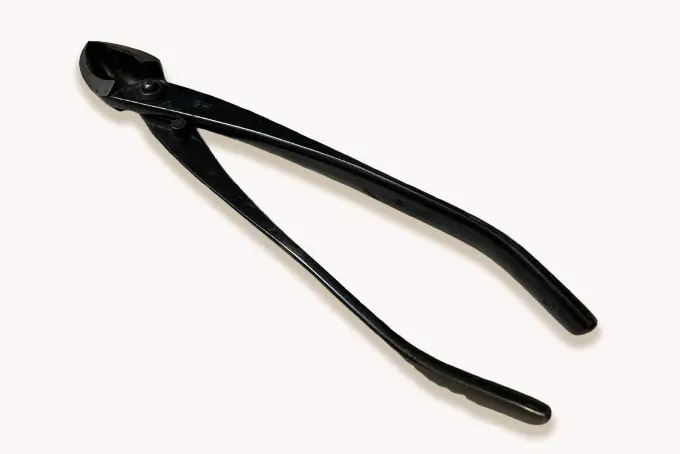
Image CSCeaamique
Its major advantage is its ability to leave a hollow wound on the trunk. This specific 45-degree shape is crucial: it speeds healing and makes the mark almost invisible once the healing callus has formed, contributing directly to the tree's aesthetics.
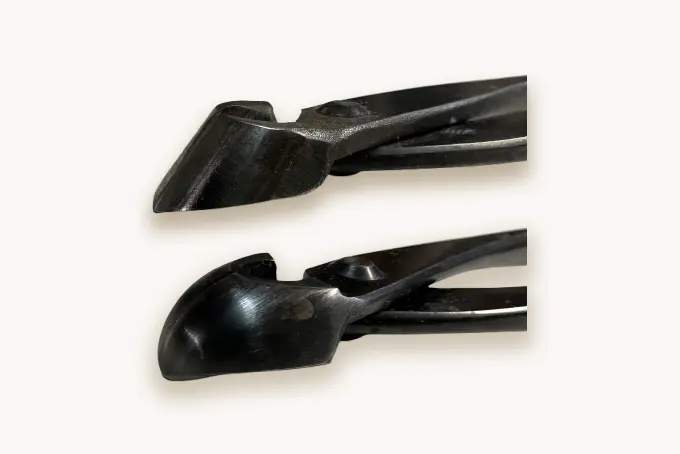
Image CSCeaamique
The rounded concave cutter
Sharing the same qualities, this version has a rounded jaw. Personally, I have both models and use this one almost exclusively. By tilting the pliers further, they dig a little deeper into the wood, further minimizing the appearance of callus. Over the years, I've noticed that wounds on the trunk close up, leaving virtually no trace.
Cutter sizes generally range from 170 mm to 205 mm.
Image CSCeaamique
The wire plier
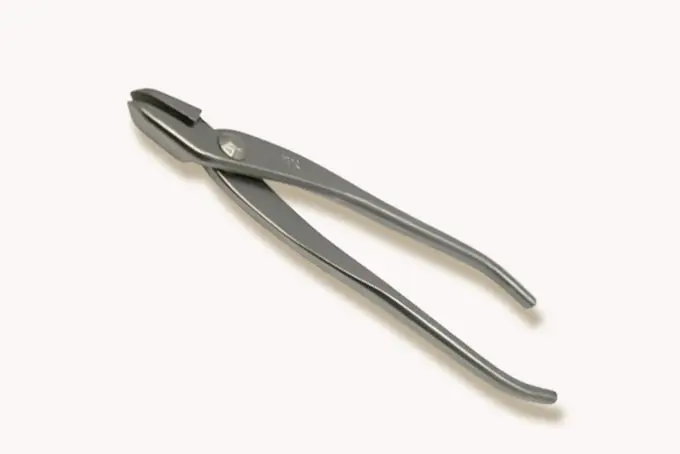
Image courtesy of
Art & Culture Bonsaï
To give your trees that venerable, dramatic look, wire pliers are your best ally. They are used to crush bark and separate wood fibers, creating “Jin” (dead branches) and “Shari” (dead wood on the trunk). It's also handy for bending or removing binding wire.
Economical tip: :
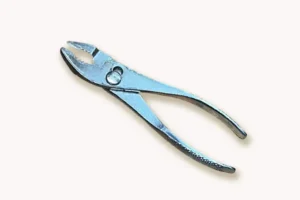
For starters, you can replace them with standard slip-joint pliers. This is an excellent alternative, as it can do a similar, if not more versatile, job. Its ability to open wider means you can work on larger branches, and at lower cost.
Image CSCeramique
Wire pliers (or long-nose pliers)
Often overlooked but formidably effective, these pliers are more easily found in hardware stores under the name of “long-nose pliers”. If you find a model with a curved tip, grab it!
Its curved design lets you see your movements clearly, without any obstructions.
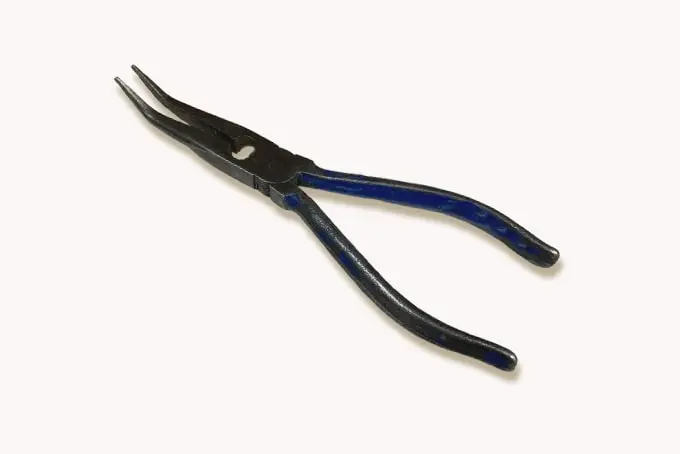
Image CSCeramique
I use it very regularly to block heavy-gauge ligatures at the end of a branch, or to remove segments of ligature wire that I've previously cut.
The wire cutter
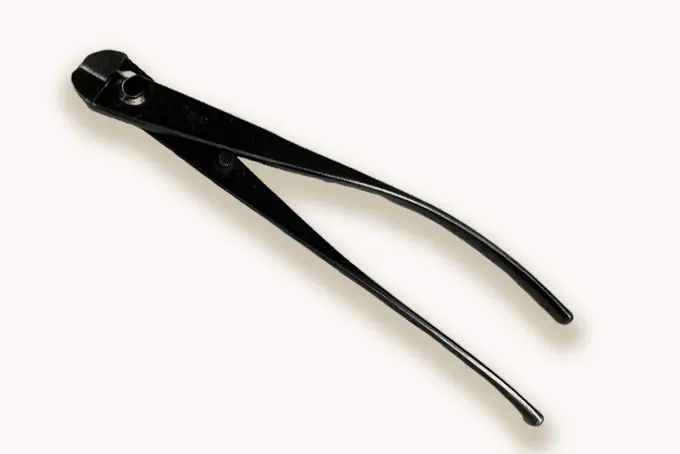
Image CSCeaamique
This tool is a must-have. It is specially designed to cut binding wire, whether aluminum or copper, without ever damaging the bark. Its rounded tip is its key feature: it slips securely over the wire and protects the branch. Indeed, a quality wire cutter is essential, especially when it comes to severing large calibers, especially as copper wire hardens over time.
Economical tip: :
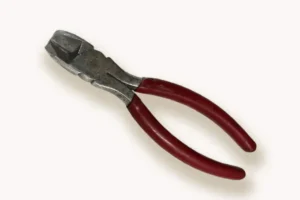
Purchase an electric wire cutter from a hardware store, then gently grind the tip to round it off. You'll have a powerful and economical tool!
Image CSCeaamique
In conclusion
In short, building your first bonsai toolkit is a thoughtful process. Always prioritize quality over quantity, concentrating on a few key items: a precise leaf chisel, efficient concave pliers and a good wire cutter. These instruments are not an expense, but a real investment in the health and aesthetics of your collection. As your expertise grows, you'll be able to enhance your equipment with more specialized tools. Your adventure is just beginning, and with the right allies in hand, it will be exciting and rewarding.