 Choisir votre langue / Choose your language
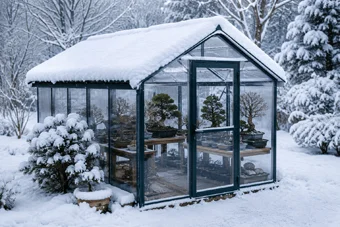
Image generated by AI
Overwintering Semi-Hardy Trees in Cold Greenhouses in Quebec
Claude Savard
CSCeramique
In Quebec, winter conditions can be particularly demanding for certain species that are less tolerant of very cold temperatures. Wintering semi-hardy trees is therefore essential in Quebec to protect them from severe cold while promoting natural dormancy.
Proper protection helps preserve the conditions required during the winter rest period. While our native species can withstand periods of intense frost without difficulty under their blanket of snow, semi-hardy bonsai, such as Japanese maple, Satsuki azalea, or certain cotoneasters, require special protection.
These species find themselves in a delicate situation. They are too sensitive to withstand the extreme temperatures of our winters, which can fall below -25 °C for several days or even weeks. However, bringing them indoors is not a better solution. Constant warmth, dry indoor air, and insufficient light can disrupt their dormancy and seriously compromise their health.
This is precisely where a cold greenhouse becomes an essential tool for overwintering bonsai in Quebec. When properly prepared, a cold greenhouse provides the trees with a cold but much more stable environment than the conditions they would experience outdoors. The goal is to keep the temperature low enough to maintain dormancy while protecting the roots from deep freezing. In this article, we will look at how to prepare a cold greenhouse for winter, what temperature to maintain, how to protect the roots, and how to manage watering during bonsai dormancy.
Understanding Bonsai Dormancy
Why Do Bonsai Trees Need a Cold Winter?
Dormancy is an essential part of the annual growth cycle of trees. During this period, their physiological activity slows considerably. Growth gradually stops, allowing the tree to rest and prepare for renewed growth when conditions become favorable. However, not all species have the same requirements.
Some species need a relatively short dormancy period, while others require several months of cold before they can resume healthy growth. Depending on the species, this period may be around 90 days, while others may require 120 to 150 days of winter rest.
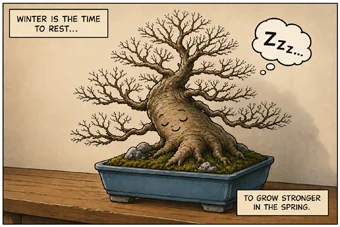
Image generated by AI
In Quebec, our climate therefore requires particular attention to this stage of the bonsai's annual cycle. As autumn arrives, deciduous trees gradually slow their activity. Their leaves change color and eventually fall. This is a clear indication that the tree is progressively entering dormancy.
In spring, as temperatures rise and conditions become favorable, the buds begin to swell. The tree then gradually emerges from its winter rest.
For bonsai, this natural cycle between winter cold and spring growth is essential. The goal is therefore not to prevent the tree from experiencing winter. Instead, you must provide it with winter conditions appropriate to its hardiness.
Why Do Semi-Hardy Bonsai
Need a Cold Greenhouse in Quebec?
Trees originating from regions with milder winters may require a period of dormancy without being able to tolerate the extreme temperatures found in Quebec.
The main problem is the root system. A tree planted directly in the ground benefits from a large volume of soil that acts as a thermal buffer. A bonsai, however, grows in a pot containing a much smaller volume of substrate. When outdoor temperatures drop sharply, the cold can therefore penetrate the root ball very quickly.The foliage and branches of some species can tolerate relatively low temperatures, but the roots are generally much more vulnerable. A root ball that freezes deeply for an extended period can suffer significant damage.
The Main Goal: Protect the Root Ball
A cold greenhouse is therefore not intended to keep bonsai warm. Its primary purpose is to prevent the root ball and roots from being exposed to the extreme winter temperatures found in Quebec.
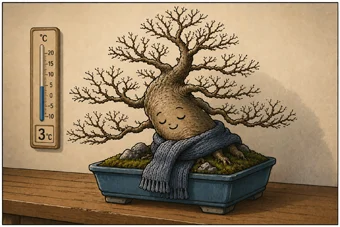
Image generated by AI
For many semi-hardy bonsai species, maintaining an indoor temperature around . 2 °C to 5 °C provides a practical range for keeping the trees dormant while reducing the risk of deep freezing.
Temperature stability, however, is just as important as the temperature itself. If temperatures regularly rise above 8 °C, some trees may gradually begin to emerge from dormancy. And that is when problems can begin.
The Danger of Premature Bud Break in February
A winter thaw can quickly raise the temperature inside a small greenhouse. Outside, the temperature may be -5 °C while sunlight turns your greenhouse into a heat trap. Within a few hours, the internal temperature can easily rise above 15 or even 20 °C. For a bonsai that is still in winter dormancy, these significant temperature fluctuations can trigger premature bud break. The buds may begin to swell. If the tree starts growing in February, you can quickly find yourself facing a difficult situation.
Natural light remains weak at this time of year. You would therefore need to provide sufficient supplemental light and maintain an appropriate temperature to support the development of new shoots.
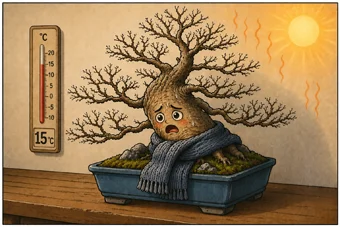
Image generated by AI
In other words, premature growth in February can force you to heat and light your greenhouse for several weeks while Quebec's winter is still far from over.It is much better to prevent this problem than to try to correct it later.
How to Set Up a Cold Greenhouse
for Bonsai in Quebec
A small greenhouse used for overwintering bonsai should be designed to minimize temperature fluctuations. Insulation, supplemental heating, ventilation, and sunlight management all play an important role.
Properly Insulate the Greenhouse
A small greenhouse without insulation is difficult to maintain at a stable temperature during Quebec's severe winter conditions. You may therefore end up using a considerable amount of energy to compensate for heat loss.
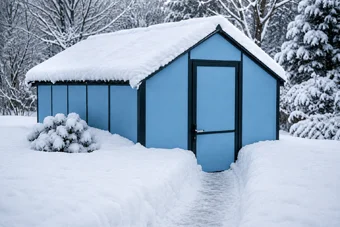
Image generated by AI
One solution is to insulate the interior walls and floor with rigid extruded polystyrene insulation panels. A thickness of 5 cm is a good starting point, while some bonsai enthusiasts use thicker panels when conditions require additional insulation.
A practical method is to attach the insulation panels to plywood panels cut to the appropriate dimensions. This makes it easier to remove and reinstall the insulation system every year.
Should Bonsai Be Kept in Complete Darkness?
To maintain deep dormancy, some bonsai enthusiasts choose to completely block light from the greenhouse during much of the winter. The goal is not simply to keep the trees in darkness. It is primarily to prevent major temperature increases caused by solar radiation. This strategy becomes particularly useful in February and March, when the sun becomes significantly stronger.
Arrange Bonsai According to Their Cold Hardiness
The position of each tree inside the greenhouse can also make a difference.
The most cold-hardy bonsai can be placed in the colder areas, particularly closer to the floor. More sensitive species, on the other hand, can be placed in the slightly warmer areas of the greenhouse. This arrangement allows you to create natural temperature zones.
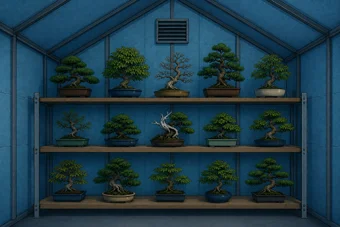
Image generated by AI
In a small greenhouse, every inch matters. You should therefore carefully plan the placement of your trees, heater, fans, and ventilation systems before winter arrives.
Ventilation and Air Circulation
Humidity is another major concern during winter storage.
A closed, cool, and humid greenhouse creates favorable conditions for certain fungal diseases, particularly gray mold caused by Botrytis cinerea. Botrytis cinerea.
The solution is simple: maintain gentle and regular air circulation.
Install a Small Fan.
A small fan can operate continuously to create gentle air movement. You should not create a strong draft directly on the trees.
The goal is simply to prevent humid air from remaining stagnant around the foliage, branches, and pots. Good air circulation also helps reduce condensation and areas of stagnant moisture.
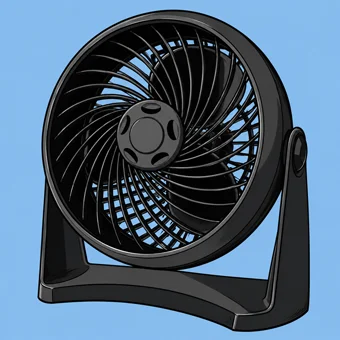
Image generated by AI
Supplemental Heating: How to Protect
Your Bonsai from Freezing ?
Even a well-insulated greenhouse may require supplemental heating during periods of extreme cold. A small electric heater suitable for the environment can be controlled using a precision horticultural thermostat. For example, an Inkbird-typecan automatically monitor the temperature using a remote probe.
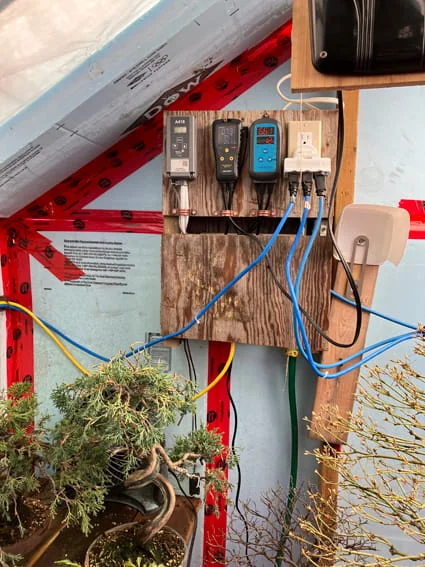
Image Sacha Bois
In this small greenhouse, you’ll notice the various monitoring devices needed to maintain an optimal environment for growing semi-hardy trees. A digital thermometer monitors the temperature, and a hygrometer measures the humidity level. These precise tools help create ideal conditions for the growth and well-being of your bonsai.
Where Should the Thermostat Probe Be Placed?
This is a very important detail. The probe should be installed the same level as the bonsai pots,rather than near the ceiling or directly beside the heater.
The thermostat needs to measure the temperature actually experienced by the trees.
You can also use a heating cable controlled by a thermostat when certain species require additional root protection.
Have a Backup Plan for a Power Outage
In Quebec, a power outage during a period of extreme cold can quickly become a serious problem. If your heating system depends entirely on electricity, you should therefore have a backup solution. An auxiliary heating system may be used during a prolonged outage, but very important safety precautions must be followed.
WARNING: CARBON MONOXIDE.
Any heater operating with propane, oil, or another fuel must be used according to the manufacturer's instructions and under conditions that provide adequate ventilation and safe exhaust of combustion gases. The safety of people must always come before the protection of your bonsai.
Managing Sunlight in a Cold Greenhouse
Winter sunlight can become a serious problem in a small greenhouse. In February and March, solar intensity increases rapidly. Even when outdoor temperatures remain below freezing, sunlight can cause the internal greenhouse temperature to rise dramatically. Imagine a day when the outdoor temperature is -5 °C. Outside, your bonsai are still experiencing winter conditions. Yet a few hours of direct sunlight can raise the greenhouse temperature above 15 or even 20 °C. Such a temperature increase can disrupt dormancy.
Install Automatic Ventilation
A horticultural thermostat can be used to control an exhaust fan. When the internal temperature rises above your chosen threshold, the fan can remove hot air from the greenhouse.
For a greenhouse designed to keep bonsai dormant, it is particularly important to prevent major temperature increases.
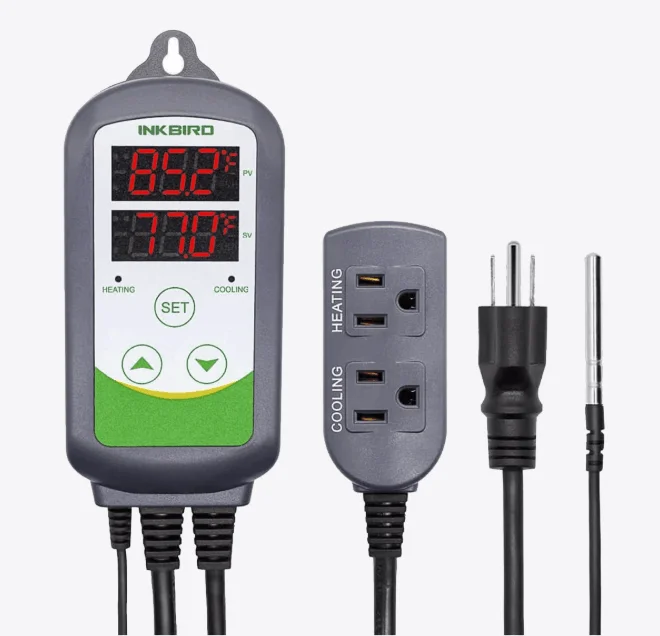
Image inkbird.com
Insulation helps retain heat when outdoor temperatures are extremely low, while ventilation allows excess solar heat to escape quickly.
The two systems therefore need to work together.
Caring for Bonsai During Winter Dormancy
Once the trees have been placed inside the greenhouse, the work is not finished.Dormancy greatly reduces the needs of bonsai, but it does not mean you can simply leave them unattended for several months. Two areas require particular attention: watering and health inspections.
Watering Bonsai During Dormancy
Winter watering requires much more observation than during the growing season. Trees use considerably less water during dormancy. As a result, the substrate dries much more slowly. Depending on temperature, humidity, substrate type, pot size, and the tree's position inside the greenhouse, watering may be necessary after one week, two weeks, or sometimes even longer. You should therefore never follow a rigid watering schedule.
Check the substrate before watering.
When the substrate begins to dry, water thoroughly enough to properly moisten the root ball, then allow excess water to drain freely.
Use Water at Greenhouse Temperature
Keep a container of water inside the greenhouse. The water will gradually reach the ambient temperature, reducing the risk of exposing the bonsai roots to extremely cold water. Above all, avoid allowing the substrate to remain completely dry for an extended period. Even during dormancy, the roots remain alive. Prolonged drying can cause significant damage and compromise the tree's spring recovery.
Health Inspection: Monitor Your Bonsai During Winter
Winter does not put every horticultural problem on hold. On the contrary, a cool and humid greenhouse can encourage the development of mold and certain pests. Inspect your trees regularly. Examine the foliage, branches, trunk, surface of the substrate, and the areas underneath the pots.
Remove dead leaves and plant debris that accumulate on the substrate. They can retain moisture and encourage fungal growth.
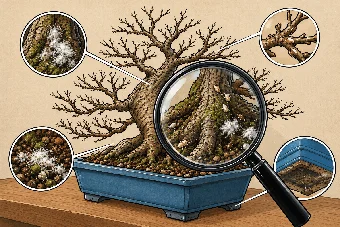
Image generated by AI
Watch for Scale Insects
Scale insects can also take advantage of the protected conditions inside a greenhouse.
Scale insects can also take advantage of the protected conditions inside a greenhouse. Regular inspections allow you to detect them early and take action before the infestation becomes significant.
Mice: Another Winter Threat to Bonsai
Field mice can quickly discover your greenhouse during winter. For them, it offers everything they are looking for: protection from the cold, shelter from predators, and sometimes a source of food. Some mice may also chew the bark of certain tree species. Watch for signs of activity, including droppings, gnaw marks, holes, or disturbed materials. If necessary, use appropriate and safe control methods, taking into account the presence of pets or other non-target animals.
Preparing Bonsai Before Bringing Them into the Greenhouse
Preparation begins before the trees are placed inside the greenhouse.
Clean the Pots and Substrate
Before winter storage, clean the pots thoroughly. Also remove any weeds that have established themselves in the substrate during the growing season. Take this opportunity to examine every tree carefully. Look for pests, injuries, dead branches, and signs of disease.
Preventive Treatments
Depending on the species and your pest-management program, a preventive treatment may be considered before bringing the trees into the greenhouse. Some bonsai enthusiasts use Bordeaux mixture or a horticultural dormant oil treatment to help reduce certain fungal problems or overwintering pests.
Important: not every treatment is suitable for every species or every season. Always follow the product label, recommended concentration, application instructions, and safety precautions.
When Should You Bring Bonsai into a Cold Greenhouse?
It is generally preferable not to bring bonsai into the greenhouse too early. Allow them to experience the cool temperatures of autumn for as long as weather conditions and their individual hardiness allow.
A few nights slightly below freezing can help signal to the tree that winter is approaching. For certain species, temperatures around 0 °C to -2 °C may occur during this transition, but their individual hardiness must always be taken into consideration.
In Quebec, this period often occurs toward the end of October or the beginning of November, depending on your region and the weather conditions of the year.
The calendar should therefore not be your only guide.
Observe your trees and monitor the weather.
Bringing Bonsai Out of the Greenhouse in Spring
Removing bonsai from the greenhouse is just as important as bringing them inside.
The main danger is taking the trees outdoors too quickly after they have already begun their spring growth.
Conversely, keeping them inside a greenhouse that becomes excessively warm in the sunlight can trigger premature bud break.
Spring is settling in this little greenhouse! You can see that the windows are already clear, a sign that the thaw has begun. This is the perfect time to acclimate the bonsai to natural light and, gradually, to the gentle rays of the sun.
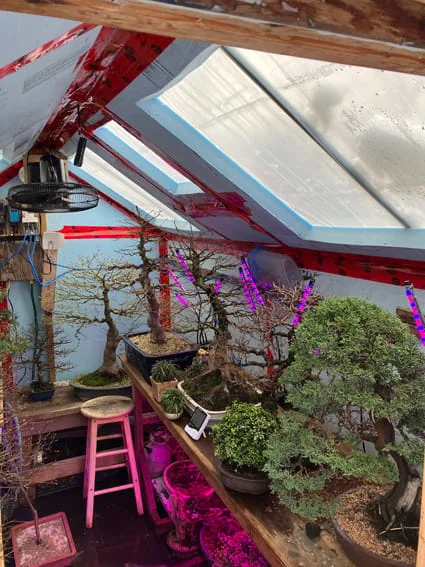
Image Sacha Bois
Why Are February and March Particularly Critical?
As the days become longer, the greenhouse can heat up very quickly. If temperatures continue to rise regularly, some trees may begin to swell their buds even though outdoor conditions are still wintry. You should therefore continue monitoring the greenhouse temperature every day. If the greenhouse has been kept dark during dormancy, you can gradually reintroduce natural light as outdoor conditions become more favorable. A gradual transition helps prevent sudden environmental changes. Once temperatures become sufficiently stable and the risk of severe cold decreases, the bonsai can gradually return to their outdoor growing area.
Common Mistakes to Avoid During Winter Storage
To successfully overwinter semi-hardy bonsai in Quebec, avoid these common mistakes:
- Bringing bonsai into the greenhouse too early.
- Maintaining temperatures that are too high during winter.
- Allowing temperatures to rise sharply on sunny days.
- Allowing the substrate to dry out completely.
- Watering according to a fixed schedule without checking substrate moisture.
- Neglecting air circulation.
- Failing to inspect the trees regularly.
- Not having a backup heating solution in case of a power outage.
- Moving the trees outdoors too quickly in spring.
- Underestimating the damage mice can cause.
These mistakes are easy to avoid when the greenhouse has a reliable temperature-control system and the trees are monitored regularly.
Successfully Overwintering Semi-Hardy Bonsai in Quebec
In conclusion
Overwintering semi-hardy bonsai in Quebec requires preparation, regular monitoring, and a good understanding of dormancy. A cold greenhouse should not be viewed as a heated room for your bonsai. Its purpose is to protect the roots from extreme temperatures while keeping the trees cold enough to remain dormant.
Maintaining a stable temperature around 2 °C to 5 °C, providing proper insulation, ensuring continuous air circulation, and managing sunlight intelligently can significantly reduce the risks associated with winter.
Watering also remains essential. Even while dormant, your bonsai need their root ball to retain an appropriate level of moisture. Regular inspections also allow you to detect fungal diseases, pests, or rodent damage before they become serious problems. Success therefore lies in the details.
By properly preparing your greenhouse before winter and monitoring your trees throughout their dormancy, you give your bonsai the best possible conditions to survive the long Quebec winter.
And when spring finally returns, your bonsai can resume growth with healthy roots, intact reserves, and strong buds ready to open for a new growing season.